Teaching kids about the solar system doesn’t just enhance their understanding of the universe—it fuels their creativity and curiosity. Combining art with science is an engaging way to strengthen children’s learning, critical thinking, and artistic skills. And what better way to do this than by introducing solar system drawing as a fun, hands-on activity?
This post is your complete guide to teaching kids how to draw the solar system, featuring engaging facts, step-by-step instructions, and tips for showcasing their artwork. Whether you’re an educator, a hands-on parent, or simply a curious kid, this activity will unlock endless possibilities for fun and education.
Understanding the Basics of the Solar System
Before grabbing the crayons and markers, it’s helpful to start with a quick introduction to the solar system. Breaking down the basics helps kids understand what they’re drawing and gives context to their creative process. Here’s a simple, kid-friendly overview of our solar system’s members.
The Planets and Their Unique Features
- Sun: The largest object in the solar system, the Sun is a massive ball of hot gas that provides light and energy to all the planets.
- Mercury: The smallest planet, nearest to the Sun. It has no moons and is covered in craters.
- Venus: Known for its thick, yellow clouds and extreme heat—it’s the hottest planet!
- Earth (our home!): The only planet known to support life, with vast oceans and green lands.
- Mars (the Red Planet): Famous for its dusty red surface and giant volcanoes.
- Jupiter (the Giant Planet): The largest planet, with a stunning red storm and 79 moons.
- Saturn (the Ringed Planet): Known for its beautiful rings made of ice and rock.
- Uranus (the Tilted Planet): A blue-green planet that rotates on its side.
- Neptune (the Windy Planet): The furthest planet, with dark blue clouds and the fastest winds in the solar system.
By explaining these features in kid-friendly language, you’re building excitement for the art project ahead!
The Art of Teaching Solar System Drawing
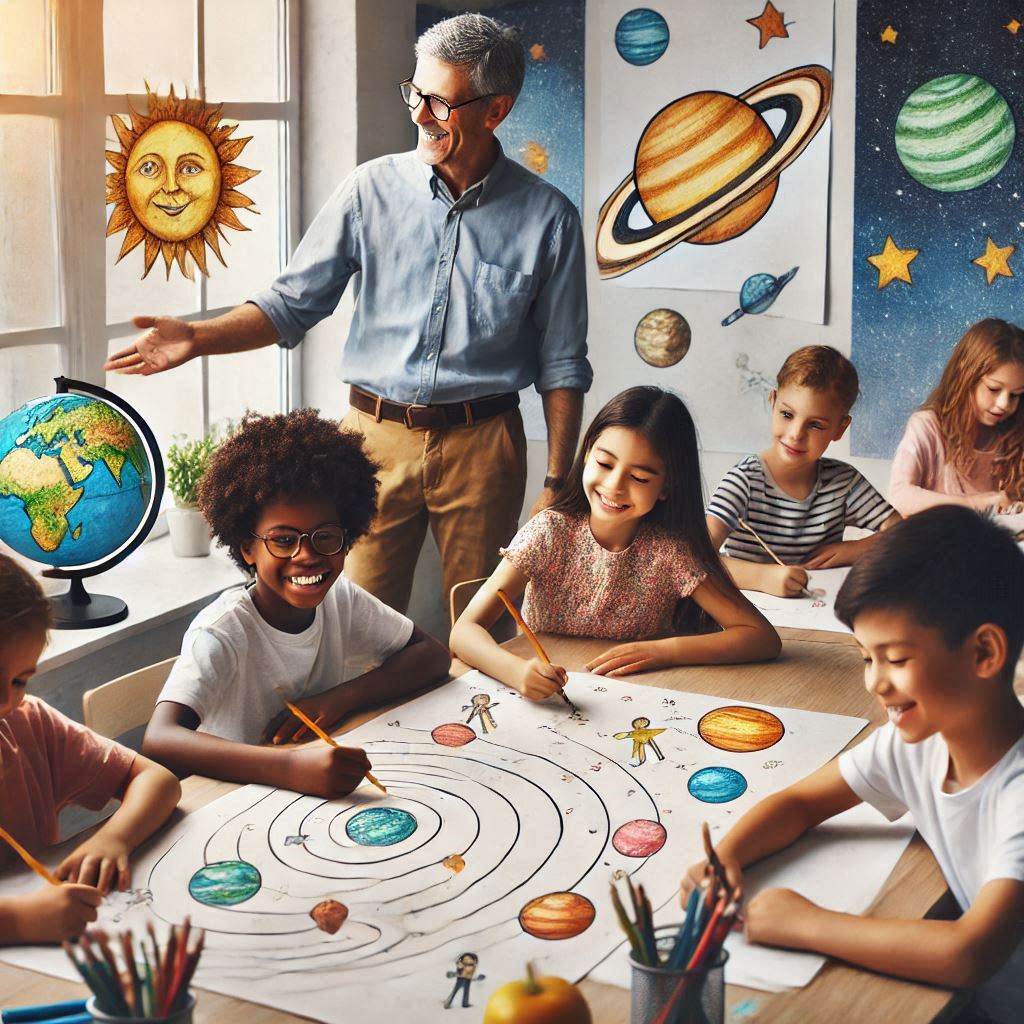
Introducing solar system drawing to kids requires preparation and age-appropriate guidance. Here’s how to make the process fun and engaging.
Materials You’ll Need
- White or black drawing paper
- Color pencils, markers, or crayons
- A ruler and compass (optional) for drawing circles
- Space stickers or glitter for decoration (optional)
Tips for Engaging Different Age Groups
- Toddlers (Ages 3-5):
- Focus on basic shapes like circles for the planets and the Sun.
- Allow freeform drawing to encourage creativity.
- Use bright, bold colors to keep them engaged.
- Younger Kids (Ages 6-9):
- Introduce the concept of scale by making Earth smaller than the Sun.
- Use simple fun facts for each planet during the activity (“Did you know Jupiter can fit 1,300 Earths?”).
- Provide stencils to help with shapes if needed.
- Older Kids (Ages 10+):
- Encourage more detailed designs, such as Saturn’s rings and Neptune’s clouds.
- Teach them shading techniques for a 3D effect.
- Incorporate discussions about orbits and patterns while drawing.
By tailoring the activity to their skill levels, every child can enjoy the process of bringing the solar system to life through art.
Step-By-Step Guide to Drawing the Solar System
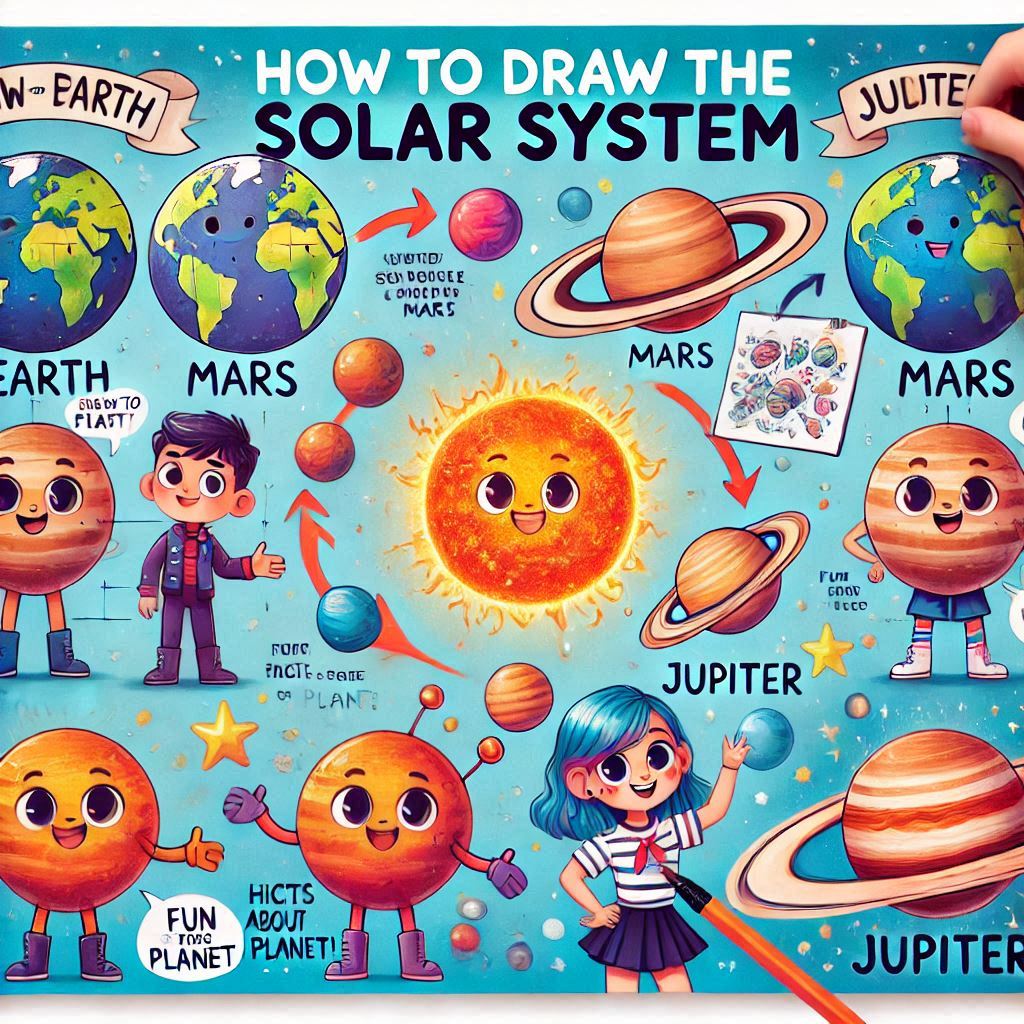
Here comes the fun part! Here’s a simple step-by-step guide to drawing common solar system objects.
Drawing the Sun
- Start with a large circle in the center of your paper.
- Draw rays extending outward to represent sunlight.
- Color it bright yellow or orange, and blend the colors for a glowing effect.
- Fun fact to share while drawing: The Sun is 109 times wider than Earth!
Drawing the Planets
Create planets around the Sun in order of their distance. Here’s a quick guide for some favorites!
- Mercury: Draw a small gray circle with craters.
- Earth: Draw a slightly larger circle, add blue for water and green for land.
- Saturn: Draw a medium-large circle with rings around it. Use beige and brown tones for the planet and gray for the rings.
- Neptune: Use dark blue shades and smaller circle sizes for faraway Neptune.
Adding Stars and the Moon
- Draw small dots across the black background paper to represent stars. Use a white or silver gel pen for extra brilliance.
- Sketch Earth’s Moon as a smaller circle next to Earth and shade it gray with tiny craters.
- Fun fact to share while drawing stars and moons: Our galaxy contains over 100 billion stars!
Be sure to encourage kids to use their creativity. They can add comets, shooting stars, or even rockets to their drawing
 Simple Drawing For Kids