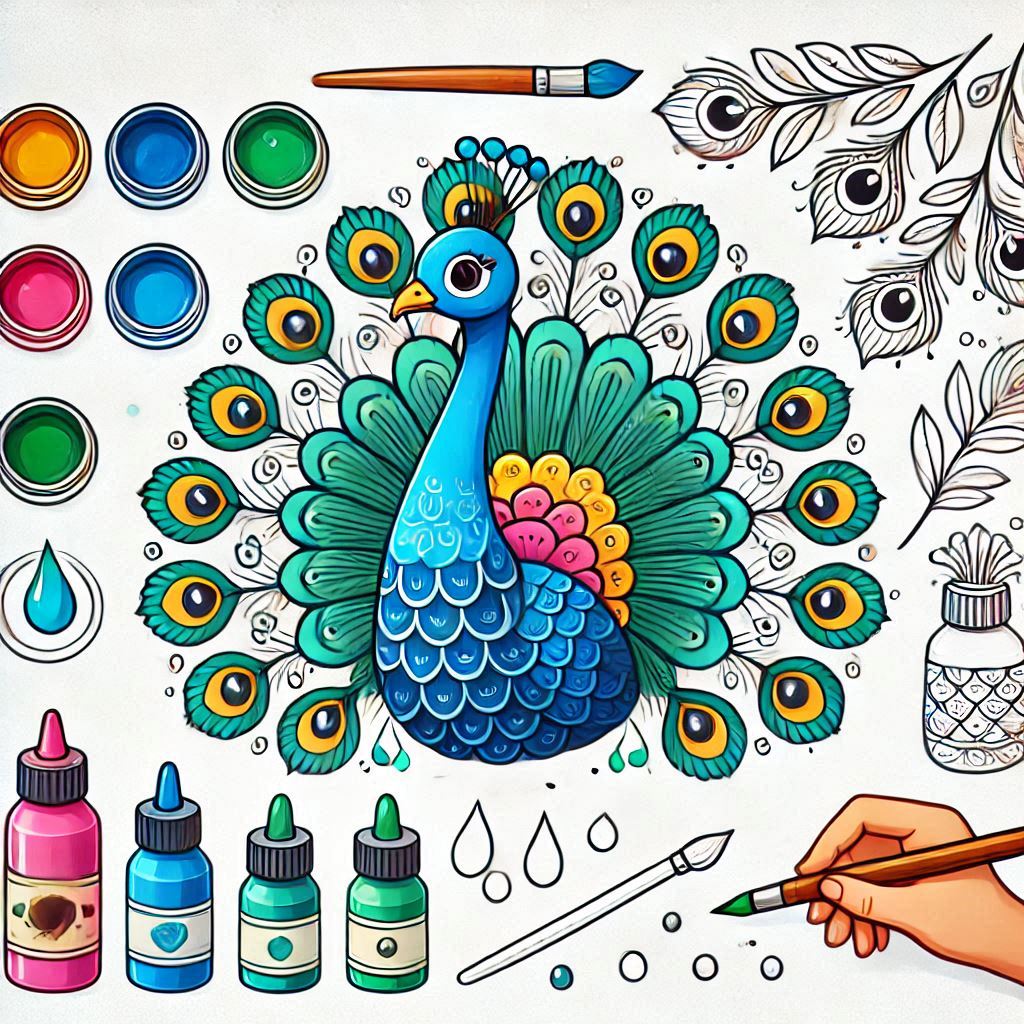
Peacocks have captivated artists of all ages for centuries. With their vibrant colours and intricate feather patterns, these regal birds make a perfect subject for budding young artists. This guide will take you through engaging and fun peacock drawing ideas with simplified steps, designed to inspire creativity in children while enhancing their artistic skills.
This blog is for parents, educators, and art enthusiasts looking for a delightful activity to nurture children’s creativity, motor skills, and cognitive development. Read on to discover step-by-step instructions, tips, and advice for making peacock drawing a joyful experience for young ones.
The Inspiring Beauty of Peacocks
Peacocks are not only a wonder of nature but also hold significance in many cultures. Known for their majestic plumage, peacocks symbolise beauty, grace, and pride. Often featured in traditional art from India to the Renaissance, they continue to inspire countless artists. For children, peacocks present an exciting opportunity to explore colour, patterns, and imaginative expressions.
With their magnificent tails and charming presence, peacocks offer a fantastic starting point for kids to experiment with art. It combines fun with learning, which is one of the best approaches to teaching young ones.
Why Drawing is Vital for Children’s Development
Drawing is more than just a creative outlet—it plays a key role in children’s overall development. Here’s why introducing drawing activities like peacocks is beneficial:
- Enhances Creativity
Drawing allows children to express their thoughts, emotions, and imagination. Making decisions about colours, shapes, and patterns stimulates their creativity.
- Develops Fine Motor Skills
Following detailed steps in drawing can improve hand-eye coordination and fine motor skills. Activities like sketching feathers or adding small details make a significant impact.
- Improves Cognitive Abilities
Drawing involves planning, problem-solving, and execution. This helps children develop cognitive skills such as spatial awareness and critical thinking.
- Confidence Booster
Successfully completing a drawing can boost a child’s confidence and encourage them to take on new challenges with enthusiasm.
Essential Supplies for Peacock Drawing
Before we start, ensure you have the right supplies ready. Here’s a checklist of everything your child will need for this activity:
- Paper (preferably A4 or sketch pads)
- Pencils (standard no. 2/HB pencils for sketching)
- Eraser
- Colouring Supplies (crayons, markers, or coloured pencils)
- Fine-Tip Markers (optional for creating details)
- Ruler & Circular Stencil (optional, for guiding shapes)
Now that we have everything set, it’s time to bring the peacock to life!
How to Draw a Peacock Step-by-Step
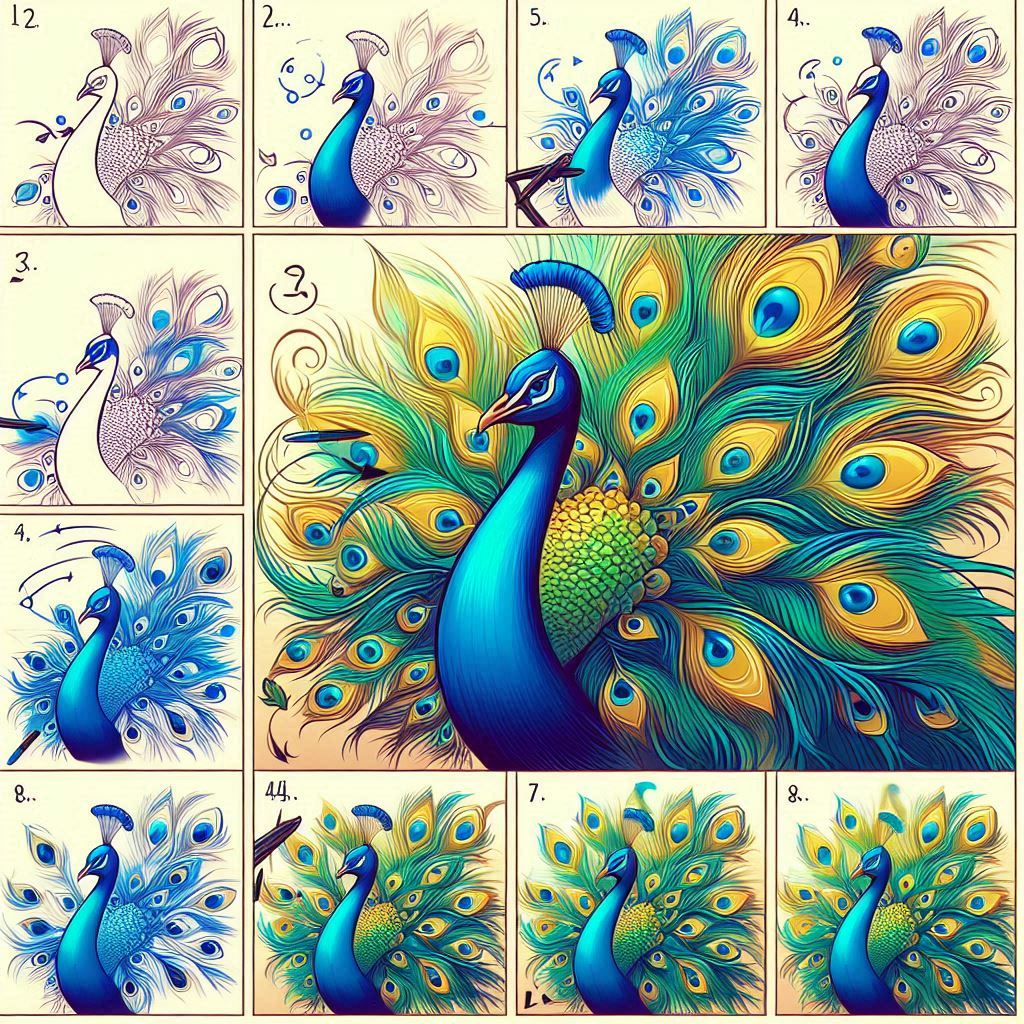
Step 1: Sketching the Basic Shapes
- Start by drawing a medium-sized circle near the top of the page—this will be the peacock’s head.
- Below it, draw an oval that’s slightly tilted, representing the peacock’s body.
- Add a long, narrow triangle starting at the oval’s bottom—this will be the bird’s tail stem.
- Lastly, use simple arcs or lines to map out where the peacock’s tail will fan out. You can create a half-circle frame to outline the tail structure.
Tip: Encourage children to draw lightly with pencils to make erasing easier.
Step 2: Adding Details
- Draw the peacock’s beak by creating a small triangle and sketch oval-shaped eyes on the head.
- Now, start detailing the feathers. Use teardrop shapes or wavy lines to layer feathers across the tail.
- Gradually add more intricate patterns and designs to the feathers, such as tiny circles or wavy lines representing “eye spots.”
- Add legs and small claws at the base using straight and curved lines.
Step 3: Adding Colours and Vibrancy
- Highlight the feathers with multiple shades—blues, greens, and yellows work brilliantly for peacock plumage.
- Use metallic or glitter markers to add shimmer to the “eye spots” on the feathers to make them truly stand out.
- For contrast, leave the body a solid blue or purple to create visual emphasis.
Step 4: Designing the Background
- Encourage children to add a background that complements their peacock. Ideas include a garden scene, a vibrant sunset, sky, or even abstract patterns that highlight the peacock’s grandeur.
- Use soft pastels or watercolours to paint the background if available.
Tips for Teaching Peacock Drawing to Children
Teaching children to draw should always be an enjoyable and engaging process. Here are some pointers to make it effective and fun:
- Start Simple
Focus on the basic structure first before adding complex details. Break each step into smaller, manageable parts.
- Demonstrate and Guide
Show the steps yourself, and guide them as they attempt to replicate each part. Offer gentle corrections where needed.
- Encourage Individuality
Allow children the freedom to make their peacock unique. Whether it’s adding unexpected colours or quirky patterns, their creativity should shine through.
- Praise Progress
Celebrate every effort, no matter the outcome. Positive reinforcement boosts their morale and keeps them invested in learning.
Showcase Your Child’s Art
Once the peacock drawings are complete, take pride in showcasing your child’s work. Frame it, pin it on the refrigerator, or create an “art gallery” space at home. You can also share it online with fellow parents or educators to build a sense of community.
Celebrating their talent not only validates their hard work but also inspires them to create more. If you’re an educator, consider organising an art exhibition to show all students’ efforts.
Nurture Creativity through Art
Drawing a peacock isn’t just an art activity—it’s a means to nurture creativity, boost confidence, and build essential skills in children. By providing them with the right tools, encouragement, and recognition, you’re opening doors to imaginative discovery.
We’d love to hear how your peacock drawing sessions went! Share your experience, along with photos of your favourite creations, in the comments below. If you’re looking for more ideas to inspire young artists, explore our library of educational content for creative activities.
 Simple Drawing For Kids