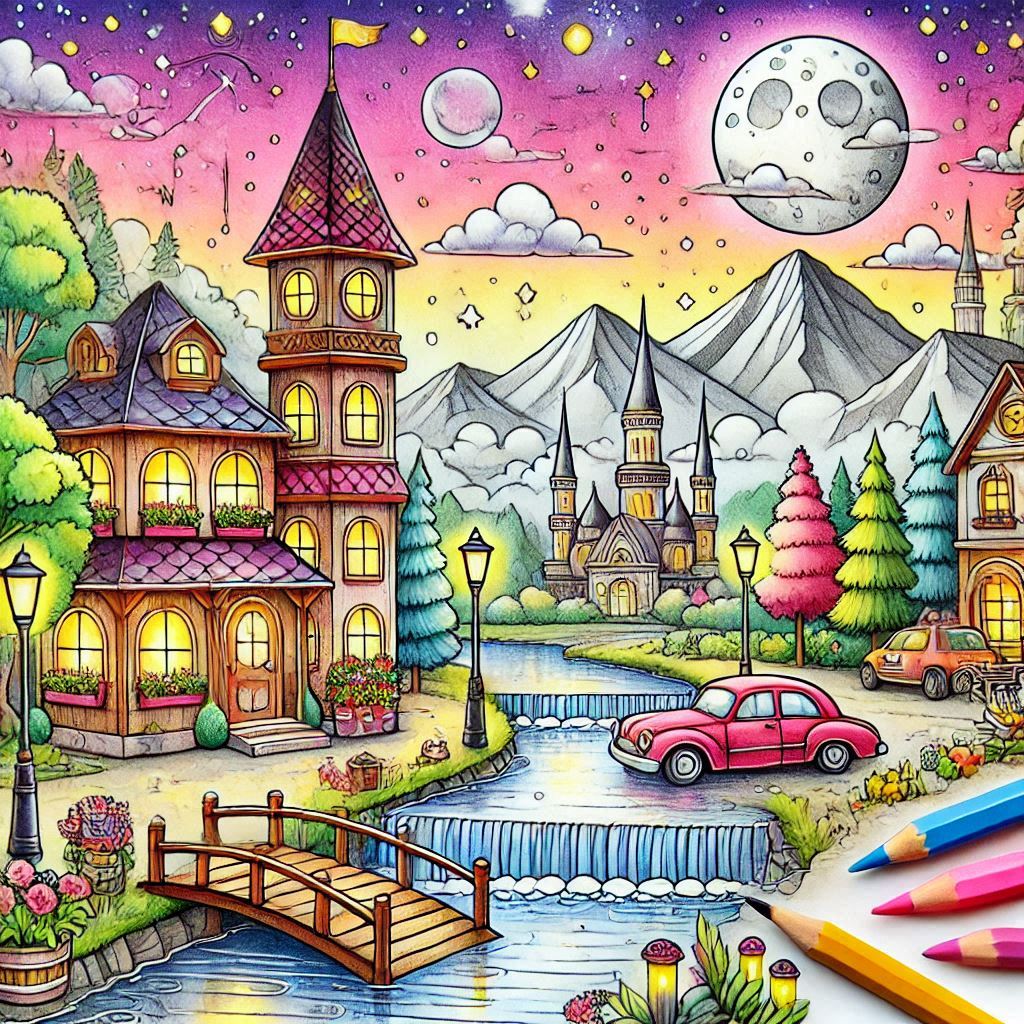
Drawing scenery is more than just an artistic pursuit. It’s a therapeutic experience that allows you to connect with nature, channel your creativity, and unwind from daily stress. Whether you’re sketching the curve of a mountain or the reflection of a starlit sky, scenery drawing invites you to capture the beauty of the world around you in new and personal ways.
For beginners, scenery drawing may feel intimidating, but it doesn’t have to be. With the right tools, guidance, and a little creativity, you can create beautiful landscapes regardless of your experience level. This guide will walk you through everything you need to start, including step-by-step instructions, fun ideas, and expert tips to bring depth and life to your artwork.
Essential Tools and Materials for Beginners
Before you put pencil to paper, it’s important to gather the right tools. Starting with quality materials will make the process smoother and more enjoyable. Here’s a list of essentials to get you started:
Basic Drawing Tools
- Pencils: Use a range of pencils, from hard (H) for light outlines to soft (B) for shading and depth. A 2B or HB pencil is ideal for beginners.
- Erasers: A kneaded eraser works well for lightening areas without damaging your paper, while a standard rubber eraser is handy for precise corrections.
- Paper: Choose medium-weight sketch paper with a smooth surface for easy blending.
Optional but Useful Supplies
- Blending stumps: These help blend pencil marks for a smoother texture.
- Coloured pencils or watercolours: Add colour and vibrancy to your scenery.
- Fine liners or ink pens: Use these for detailing or outlining your drawing.
With these tools in hand, you’re ready to move on to your first landscape sketch.
Step-by-Step Guide to Drawing a Simple Landscape

To build confidence and develop your skills, start with a straightforward landscape. Follow these steps to draw a peaceful countryside scene:
1. Sketch the Horizon Line
The horizon line acts as the foundation of your drawing. Lightly draw a horizontal line across the middle of the page to separate the land and sky.
2. Add Key Elements
Decide on a focal point, such as a sun setting behind hills or a winding river leading into the distance. Sketch these elements within your scene.
3. Draw Background Features
Begin with large, distant features such as mountains or trees on the horizon. Keep these outlines light and simple.
4. Add Foreground Details
Bring your scene to life by incorporating details such as grass, bushes, or stones in the foreground. These elements should be larger and more defined than background features to add depth.
5. Shade and Add Texture
Use light pencil strokes to add shading to trees, rivers, and hills. Pay attention to the light source in your drawing—for example, shadows should fall in the opposite direction of the sun.
6. Refine and Finalise
Erase any unnecessary lines and clean up your work. Add final details and textures to bring energy and movement to your scene.
And voilà! You’ve created your first landscape.
Fun and Engaging Scenery Ideas for All Skill Levels

Once you’ve practised a basic landscape, try experimenting with the following ideas to keep things interesting.
- Mountain Views: Sketch a snowy mountain range reflecting in a serene lake.
- Seaside Serenity: Draw soft waves brushing against a sandy shore under palm trees.
- Dusky Cityscapes: Combine urban and natural elements, such as a sunset over skyscrapers with birds in the sky.
- Woodland Wonderlands: Create a mysterious forest scene with winding paths and towering trees.
- Seasonal Scenes: Capture the essence of a particular season, like a spring meadow filled with blooms or an autumn forest with falling leaves.
These scenes cater to a range of skill levels, so choose one that matches your comfort zone and push your creativity further.
Tips for Adding Depth and Detail to Your Drawings
To take your scenery drawings to the next level, consider the following techniques to bring realism and vibrancy to your work:
1. Use Perspective
One-point or two-point perspective can add depth to your drawing. For example, use a vanishing point to create roads or rivers that narrow as they stretch into the distance.
2. Vary Line Weight
Use thicker lines for objects in the foreground and lighter lines as objects become more distant. This creates a sense of depth and dimension.
3. Experiment with Textures
Mimic the texture of natural elements with specific techniques. For instance, use short, wavy strokes for grass or soft shading for clouds.
4. Introduce Contrast
Adding contrast between light and shadow areas can make your drawing pop. Harsher contrasts work well for sunlight, while soft shading suits evening or misty scenes.
5. Incorporate Colour Thoughtfully
If using colour, stick to a limited palette to maintain harmony across your scene. To avoid overwhelming the image, add colours in layers and blend them smoothly.
How to Incorporate Scenery Drawing Into Daily Routines
Making time for art can be a challenge, but it’s worth the effort for its therapeutic benefits. Here’s how to incorporate scenery drawing into your everyday life:
- Set a Timer: Dedicate 15–30 minutes a day to practice small, simple sketches.
- Keep a Sketchpad Nearby: Carry a small sketchpad so you can draw whenever inspiration strikes—whether on your commute or during a lunch break.
- Join Online Challenges: Participate in art challenges with themes like “daily nature sketch” to keep yourself motivated and consistent.
Inspiration from Renowned Scenery Artists
Looking for creative motivation? Take inspiration from talented artists who specialise in landscape art. These professionals masterfully capture scenery with their unique styles:
- Alfred Sisley: Known for his serene, impressionistic nature scenes.
- Georgia O’Keeffe: Famous for her bold interpretations of landscapes and natural elements.
- Thomas Moran: Captures the grandeur of mountainous and desert landscapes with dramatic colour and light.
Studying their work can broaden your perspective and inspire new techniques to experiment with in your own art.
Keep Creating and Exploring
Starting a scenery drawing hobby is a fulfilling and creative way to express yourself while connecting with the natural world. Even small efforts can yield great results. Remember, practice makes progress, and there’s no right or wrong way to draw—your style will evolve as you continue.
Why not take that first step today? Grab your pencil, find your inspiration, and create your next masterpiece.
 Simple Drawing For Kids