Introduction: Sparking Creativity Through Easy Drawing for Kids
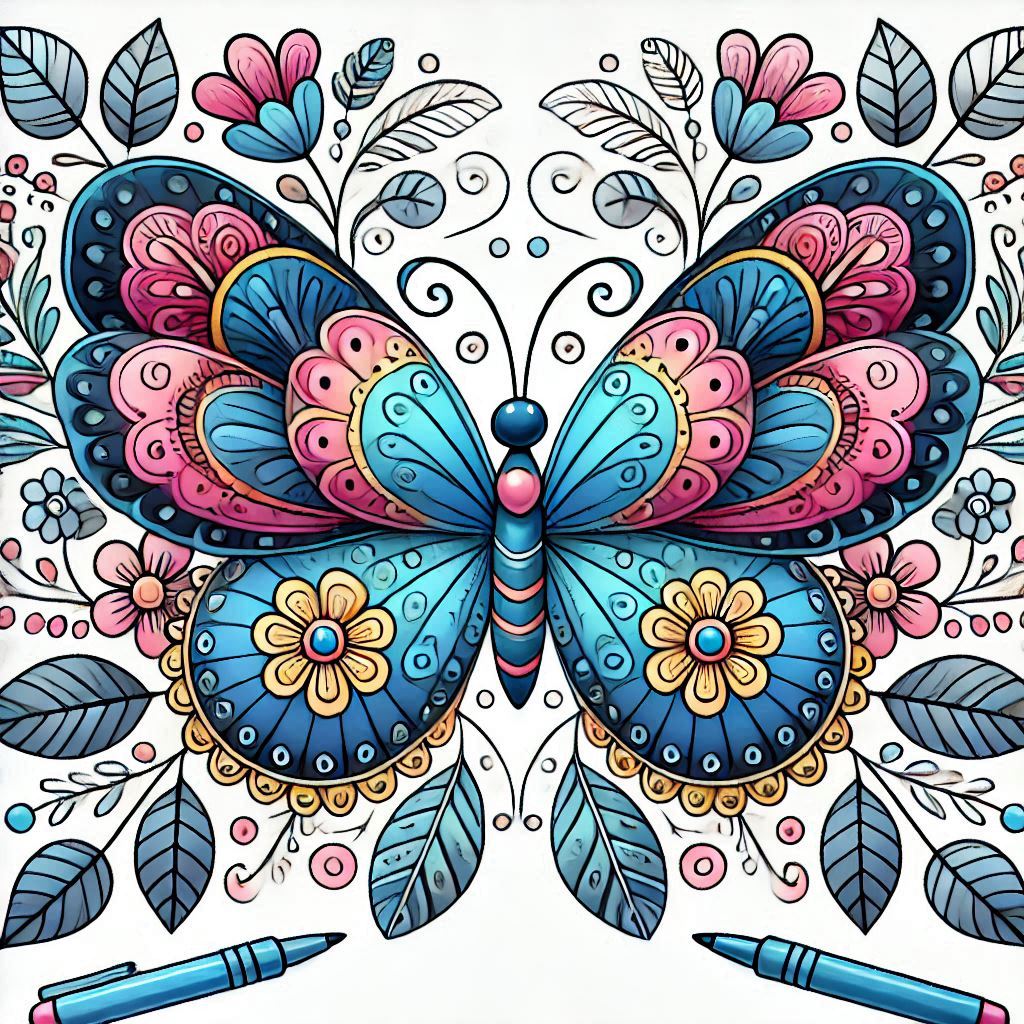
Drawing is an incredible way to engage children in creative activities. It encourages imagination, builds fine motor skills, and provides a relaxing outlet for expression. This guide, focusing on easy drawing for kids, introduces a step-by-step approach to drawing a butterfly—a simple and delightful subject that children love.
Whether you’re a parent looking for weekend activities or a teacher designing an art lesson, this butterfly drawing tutorial is perfect for nurturing young artists. Along the way, you’ll find tips, benefits, and answers to common questions, ensuring a fun and educational experience for everyone.
Why Drawing is Beneficial for Kids
1. Enhancing Creativity
Drawing enables children to think outside the box, visualize ideas, and translate them onto paper. It boosts their ability to innovate and create something uniquely their own.
2. Improving Motor Skills
Holding pencils, sketching shapes, and coloring patterns enhance hand-eye coordination and fine motor skills, which are essential for academic and everyday tasks.
3. Encouraging Emotional Expression
Art is a non-verbal medium for children to express their feelings, fostering emotional development and self-awareness.
4. Building Confidence
Completing a drawing—especially through easy, step-by-step guides—gives kids a sense of accomplishment and motivates them to take on new challenges.
Tools and Materials Needed for Butterfly Drawing
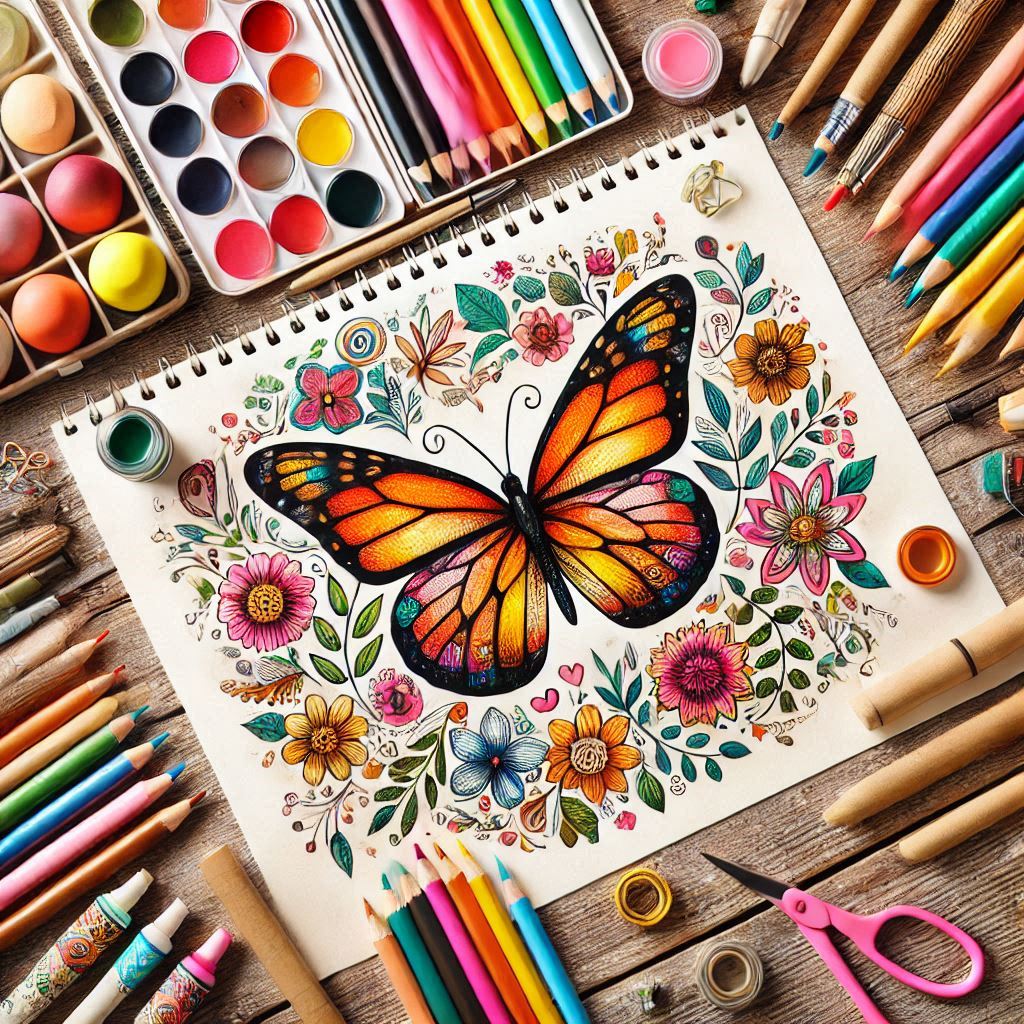
Before starting, gather the necessary materials:
Basic Supplies:
- Paper: Use plain or drawing paper. Thicker sheets are great for coloring.
- Pencil: A standard HB pencil is ideal for sketching.
- Eraser: Soft erasers are perfect for corrections.
- Colored Pencils or Crayons: Bright, vivid colors will make the butterfly come to life.
Optional Tools:
- Ruler: Helps create symmetrical patterns.
- Markers: For bold outlines.
These tools are affordable, accessible, and perfect for kids learning to draw.
Step-by-Step Butterfly Drawing Guide for Kids
Step 1: Draw the Butterfly’s Body
- Start with a vertical oval for the body in the center of the paper.
- Add a small circle on top for the butterfly’s head.
Step 2: Sketch the Wings
- Draw two large, rounded wings extending outward from the upper part of the body.
- Add two smaller wings underneath to complete the butterfly’s iconic shape.
Step 3: Add Wing Patterns
- Use lines, circles, or creative shapes to design patterns inside the wings.
- Encourage kids to keep the patterns symmetrical for a balanced look.
Step 4: Draw the Antennae
- Add two thin, curved lines on top of the head to form the butterfly’s antennae.
Step 5: Color the Butterfly
- Choose vibrant colors for the wings, using crayons, colored pencils, or markers.
- Blend multiple colors for a more creative and artistic effect.
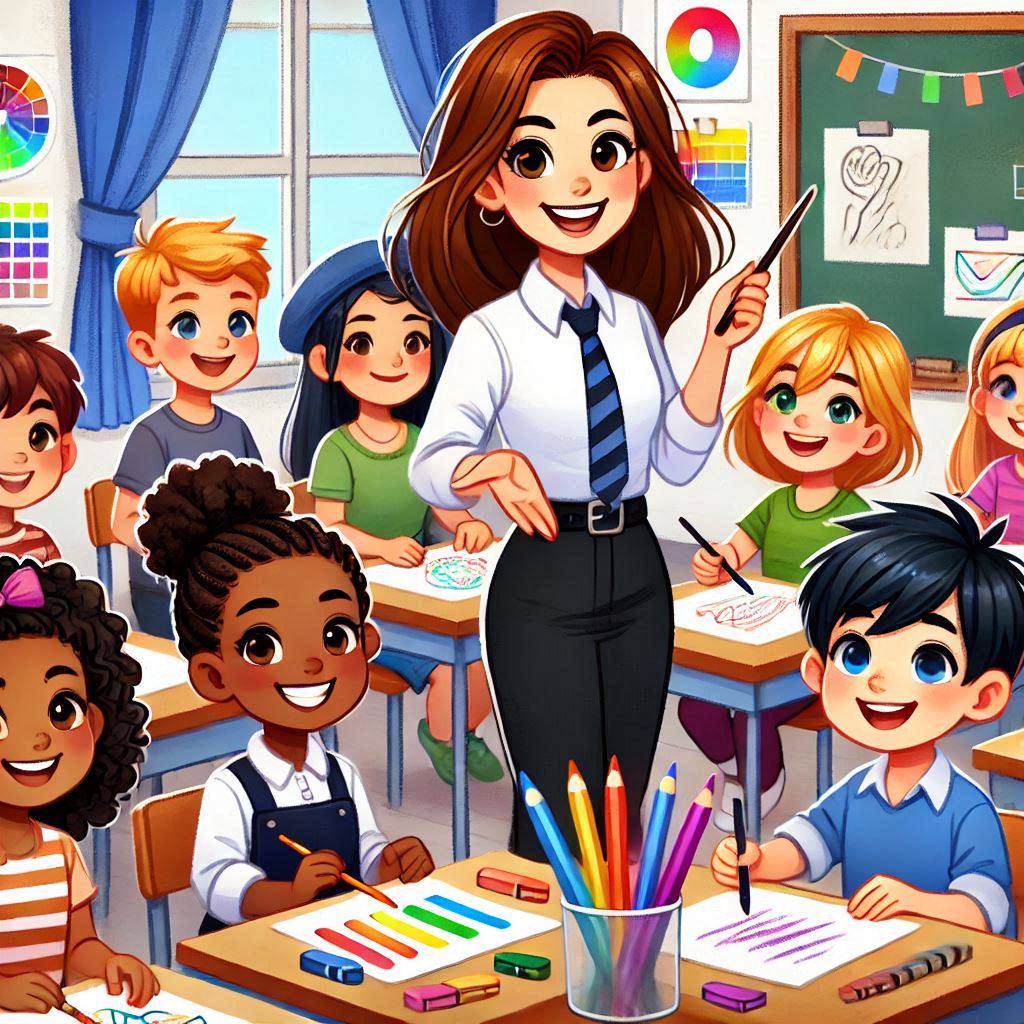
Tips for Teaching Kids How to Draw
1. Start with Basic Shapes
Encourage kids to break down the drawing into simple shapes like ovals, circles, and lines. This makes the process easier to understand.
2. Foster Creativity
Allow children to add their unique patterns and color combinations to the butterfly’s wings.
3. Be Patient and Encouraging
Celebrate their effort rather than focusing on perfection. Positive reinforcement builds confidence.
4. Use Step-by-Step Guides
Structured tutorials, like this one, make drawing less overwhelming and more fun for beginners.
Common Mistakes and How to Avoid Them
1. Uneven Wings
Solution: Lightly sketch the wings before finalizing them to ensure symmetry.
2. Overcomplicated Patterns
Solution: Encourage simple designs, especially for younger children.
3. Pressing Too Hard with the Pencil
Solution: Teach kids to sketch lightly, making it easier to erase mistakes.
By addressing these mistakes early, children can build confidence and improve their skills.
FAQs About Drawing for Kids
1. How can I make drawing easier for my child?
Break down the subject into basic shapes and guide them step by step.
2. What are the best beginner drawing tools for kids?
A pencil, eraser, and colored crayons or markers are perfect for beginners.
3. How long does it take to learn to draw simple shapes?
Most kids can master basic shapes like circles, squares, and ovals with regular practice in just a few sessions.
 Simple Drawing For Kids